

This fragment is available on en/copyrights.html
This publication includes IP covered under the following statements.
| Type | Reference | Content |
|---|---|---|
| web | snomed.info | SNOMED CT: 248153007 (Male) |
| web | fhir.example.org | organization : Acme Lab |
| web | fhir.example.org | location : Health Level Seven International |
| web | fhir1.example.org | Westwood Physicians Organization ADT |
| web | fhir2.example.org | Brenda.Jennings.Richard.MD@direct.example.org |
| web | fhir.example.org | requester : Ronald Bone, MD |
| web | fhir.example.org | performer : Ronald Bone, MD |
| web | fhir.example.org | specimen : Serum specimen |
| web | fhir.example.org | basedOn : https://fhir.example.org/fhir/ServiceRequest/34c2af5e-14e3-41c0-9f65-4e5128e48e47 |
| web | fhir.example.org | https://fhir.example.org/fhir/Device/udi-2 |
| web | snomed.info | US Core Interpreter Needed Extension : SNOMED CT: 373066001 (Yes) |
| web | fhir.example.org | HL7 East Ambulatory |
| web | fhir.example.org | Holy Family Hospital |
| web | snomed.info | SNOMED CT: 248152002 (Female) |
| web | en.wikipedia.org | Both Bundle.link and Bundle.entry.link are defined to support providing additional context when Bundles are used (e.g. HATEOAS ). |
| web | wiki.ihe.net | This is a metadata field from XDS/MHD . |
| web | www.iso.org |
ISO maintains the copyright on the country codes, and controls its use carefully. For further details see the ISO 3166 web page: https://www.iso.org/iso-3166-country-codes.html
Show Usage
|
| web | ucum.org |
The UCUM codes, UCUM table (regardless of format), and UCUM Specification are copyright 1999-2009, Regenstrief Institute, Inc. and the Unified Codes for Units of Measures (UCUM) Organization. All rights reserved. https://ucum.org/trac/wiki/TermsOfUse
Show Usage
|
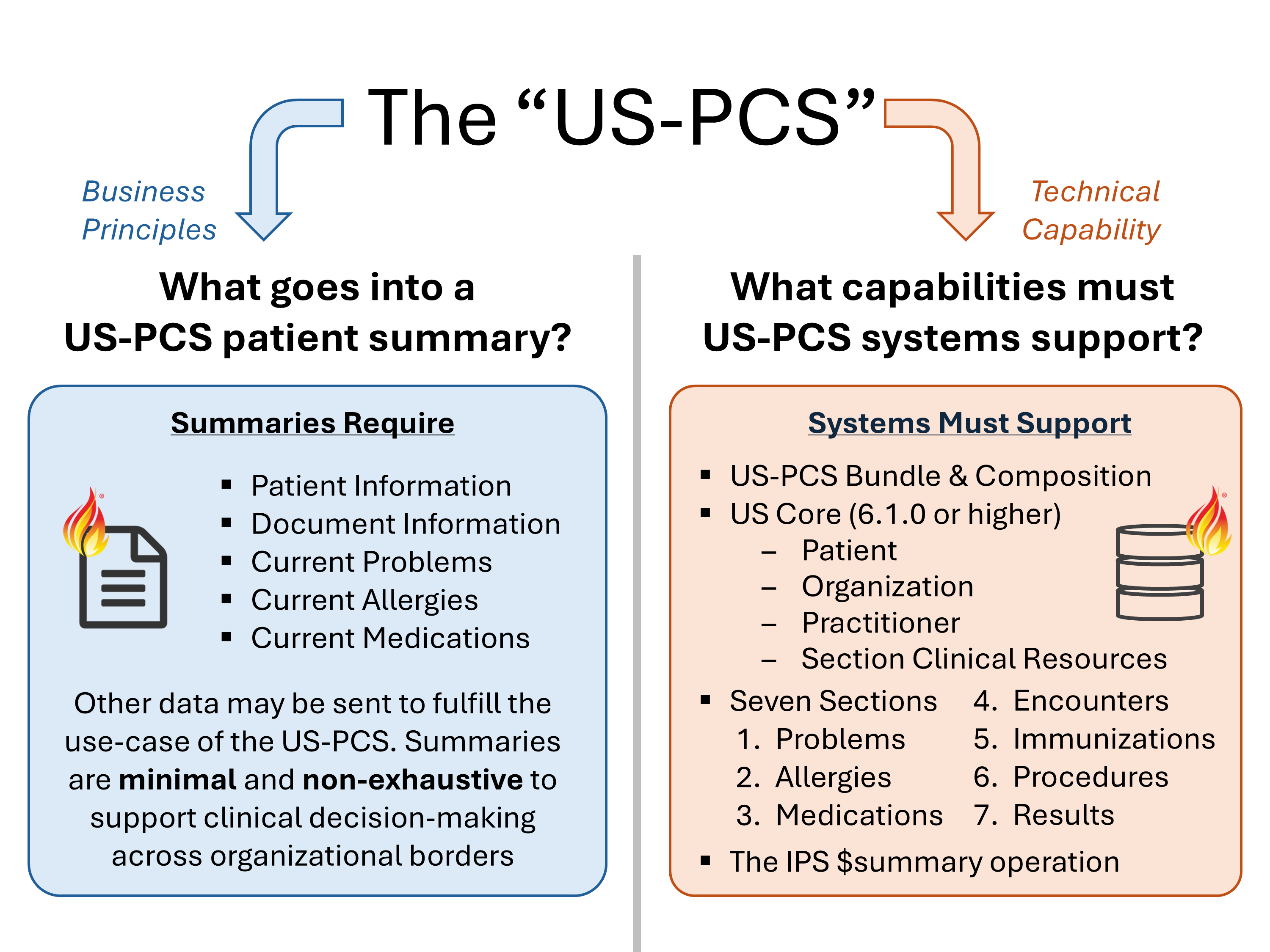
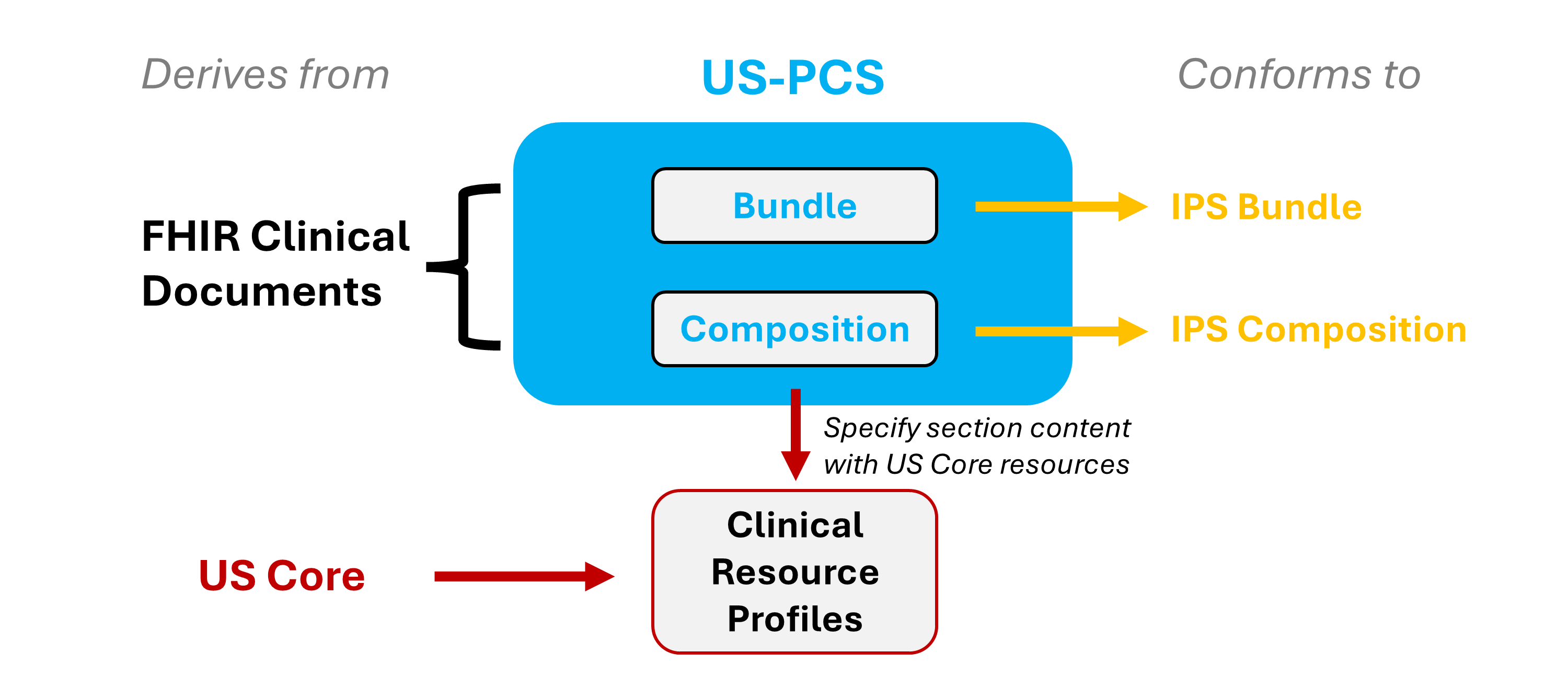
| web | www.iso.org | The primary use case of the United States Patient Care Summary (US-PCS) is to conform with the use case from ISO 27269 and the IPS FHIR Implementation Guide 2.0.1 . From ISO 27269 "the primary value of a patient summary, normalized by the IPS, is to facilitate and support appropriate clinical decision-making for the patient at the point of care. The IPS is designed to provide relevant information to assist planned and unplanned care across any organizational boundary, including country borders and their jurisdictional requirements (e.g. local, regional, state/provincial, national and international contexts)." Both ISO 27269 and the FHIR IPS Implementation guides emphasize that patient summaries are minimal and non-exhaustive . |
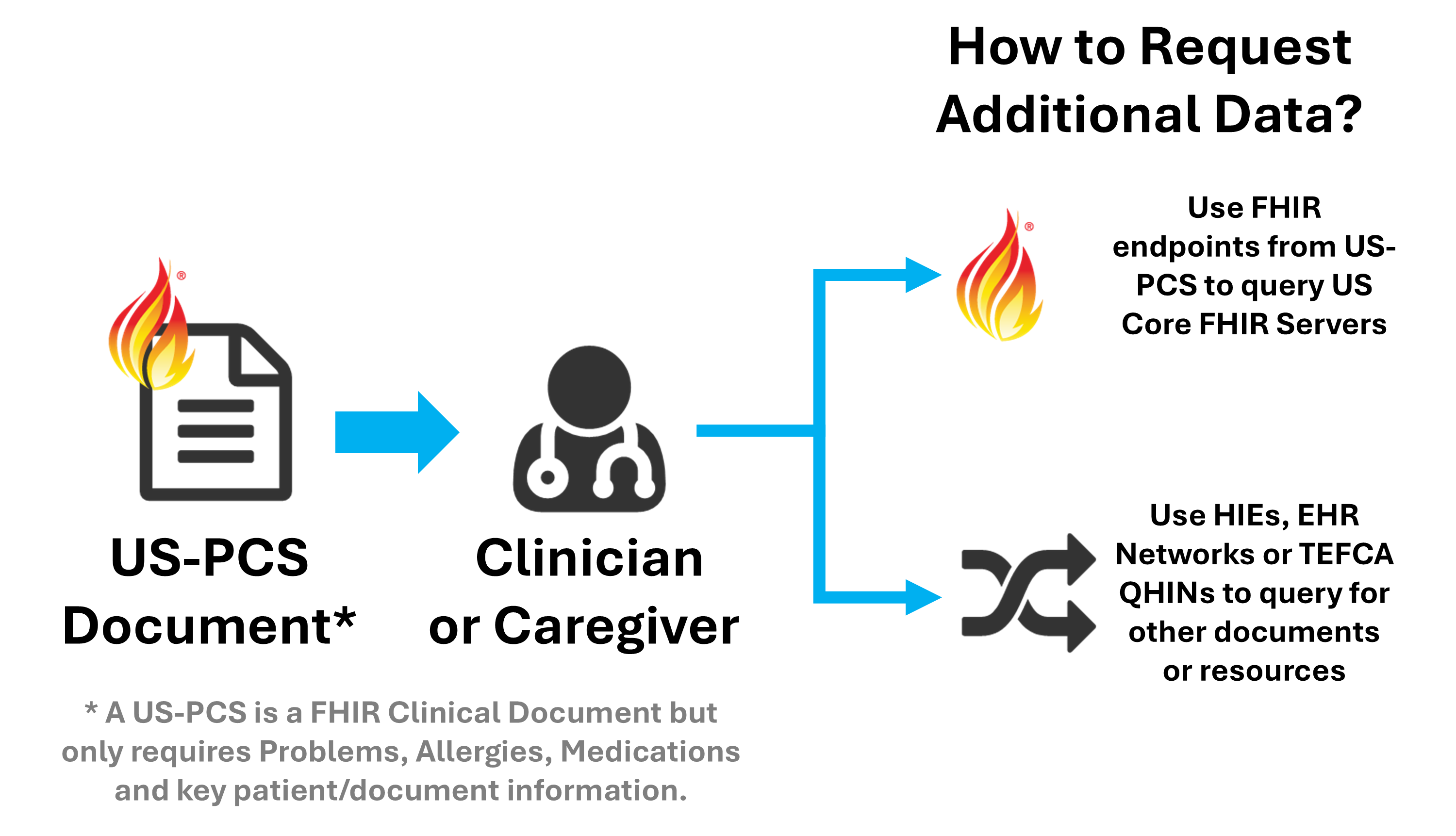
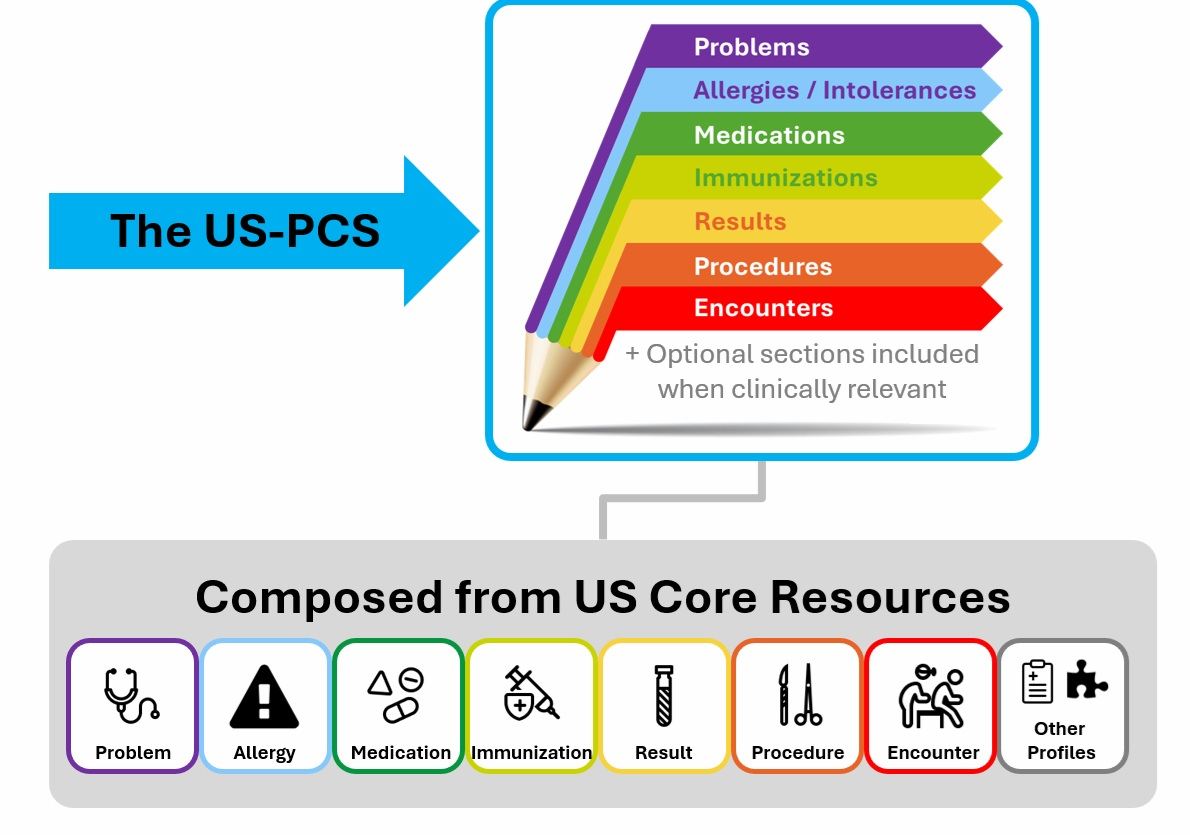
| web | carequality.org | In keeping with guidance from the IPS, the US-PCS only requires three sections of Problems, Allergies and Medications along with key patient and document information. There are many scenarios where information not included in US-PCS documents will be necessary for optimal clinical care. When appropriate, providers can leverage the ecosystem of US health information exchange capabilities to query for additional data. These may include organizational FHIR endpoints, regional health information exchange organizations (HIEs), networks available through electronic health record (EHR) vendors (e.g. CareQuality and Commonwell ) as well as Qualified Health Information Networks (QHIN) through the Trusted Exchange Framework and Common Agreement (TEFCA) . Establishing patterns to request additional information supports the principles of US-PCS as aligned with the IPS, as illustrated below. |
| web | www.commonwellalliance.org | In keeping with guidance from the IPS, the US-PCS only requires three sections of Problems, Allergies and Medications along with key patient and document information. There are many scenarios where information not included in US-PCS documents will be necessary for optimal clinical care. When appropriate, providers can leverage the ecosystem of US health information exchange capabilities to query for additional data. These may include organizational FHIR endpoints, regional health information exchange organizations (HIEs), networks available through electronic health record (EHR) vendors (e.g. CareQuality and Commonwell ) as well as Qualified Health Information Networks (QHIN) through the Trusted Exchange Framework and Common Agreement (TEFCA) . Establishing patterns to request additional information supports the principles of US-PCS as aligned with the IPS, as illustrated below. |
| web | myhealthsummary.demo.cirg.uw.edu | When paired with SMART Health Links, US-PCS data can be packaged into a secure, portable URL that patients can easily share across healthcare organizations. While this US-PCS Implementation Guide does not offer full guidance on this use case, it is anticipated that US-PCS will be a component in initiatives like "Kill the Clipboard" that replace paper‑based intake forms with digital, patient‑mediated interoperability. In addition several early implementations of this (such as Washington State Health Summary and CommonHealth ) show the potential of this approach. |
| web | www.commonhealth.org | When paired with SMART Health Links, US-PCS data can be packaged into a secure, portable URL that patients can easily share across healthcare organizations. While this US-PCS Implementation Guide does not offer full guidance on this use case, it is anticipated that US-PCS will be a component in initiatives like "Kill the Clipboard" that replace paper‑based intake forms with digital, patient‑mediated interoperability. In addition several early implementations of this (such as Washington State Health Summary and CommonHealth ) show the potential of this approach. |
|
../assets/images/usa.svg
|
|
More-Info.png
|
|
The US-PCS Principles.png
|
|
The US-PCS.png
|
|
US-PCS-Relationships.png
|
|
tree-filter.png
|